
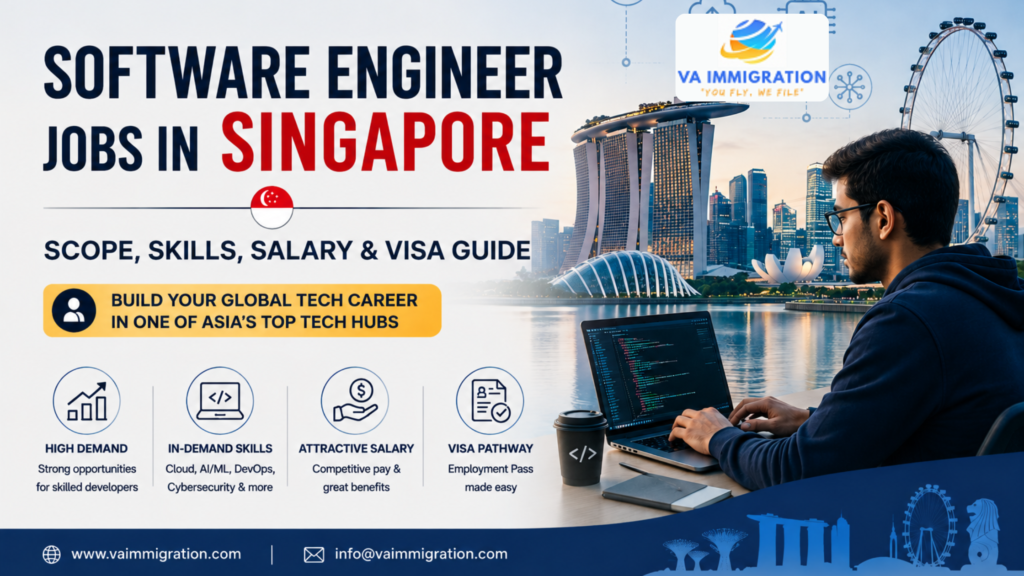
Singapore has become an attractive destination for technology professionals looking for international career opportunities.
But there is an important point many job seekers miss:
Singapore is not simply looking for more software engineers. It is looking for professionals with skills that match the needs of its technology-driven economy.
According to Singapore’s Ministry of Manpower, software, web, multimedia and game developers and designers remained among the most sought-after occupations in 2025. Demand was also strong for systems analysts, data scientists, applications and systems programmers, including AI and machine-learning engineers.
So, if you are a software engineer in India thinking about working in Singapore, what does the market actually look like?
What Is the Scope for Software Engineers in Singapore?
The scope remains promising, particularly for professionals working in areas such as:
- Software development
- Backend and frontend development
- Full-stack engineering
- Cloud computing
- Data engineering
- Artificial intelligence
- Machine learning
- Cybersecurity
- Mobile application development
- Systems engineering
- Platform engineering
Singapore’s technology sector continues to evolve as businesses invest in digitalisation, AI, data, and technology infrastructure.
The Ministry of Manpower reported that technology-related roles continued to be among Singapore’s most in-demand occupations, while employers increasingly emphasised skills and competencies rather than academic qualifications alone.
That means having a degree is useful, but what you can actually build, solve, and contribute can matter just as much.
Which Software Engineering Skills Are in Demand?
The market is becoming more skills-focused.
For software professionals, useful areas include:
- Software Development
Strong programming fundamentals remain important.
Depending on your career path, experience with languages such as Java, Python, JavaScript, C#, or other industry-relevant technologies can be valuable.
- Cloud & DevOps
Companies increasingly rely on cloud infrastructure and scalable systems.
Experience with cloud platforms, CI/CD, containers, infrastructure, and DevOps practices can strengthen a software engineer’s profile.
- AI & Machine Learning
AI is becoming an increasingly important part of technology jobs.
Singapore’s labour-market information specifically identifies AI and machine-learning engineers among technology roles seeing strong demand.
- Data Engineering
Companies need professionals who can build systems that collect, process, store, and analyse large amounts of data.
- Cybersecurity
As businesses become more dependent on digital systems, protecting applications, networks, and data remains an important technology function.
Is Singapore Good for Indian Software Engineers?
It can be—but it shouldn’t be treated as an automatic opportunity.
A strong Indian software engineer with relevant experience, good technical skills, and a profile that matches an employer’s requirements may find Singapore an attractive international career destination.
However, Singapore’s immigration system is selective.
For an Employment Pass (EP), foreign professionals need a Singapore job offer and must meet the applicable qualifying salary and COMPASS requirements. The current EP minimum qualifying salary is S$5,600 per month for most sectors, with the requirement increasing progressively with age.
From 1 January 2027, the minimum for new EP applications will increase to S$6,000, again increasing progressively with age.
So simply having a software engineering degree does not automatically mean someone qualifies for an Employment Pass.
What About the Shortage Occupation List?
This is an area software professionals should pay attention to.
Singapore’s Ministry of Manpower’s Shortage Occupation List includes roles such as:
- Software developer
- Software engineer
- Applications programmer
- Systems programmer
- Web and mobile applications developer
- Software and applications manager
Eligible roles on the list can receive additional consideration under the COMPASS Skills Bonus, subject to the applicable requirements. Certain technology roles can also qualify for a longer Employment Pass duration.
But there is an important catch:
Your job title alone is not enough.
The actual duties performed and the additional requirements for the occupation matter.
What Experience Should a Software Engineer Have?
There is no single number of years that guarantees a Singapore job.
Instead, employers generally look at the overall profile:
- Technical expertise
- Relevant work experience
- Projects handled
- Programming skills
- Industry knowledge
- Problem-solving ability
- Communication
- Experience with modern technology
For some shortage-occupation roles, Singapore’s requirements specifically include relevant degrees or qualifying work experience.
This is why a software engineer with three years of highly relevant experience may sometimes be more attractive than someone with a longer career but outdated technical skills.
How Can Indian Software Engineers Prepare?
If Singapore is part of your career plan, don’t start with the visa.
Start with your employability.
Build a Strong Technical Profile
Keep your skills aligned with what employers are actually using.
Improve Your Resume
Your CV should show what you achieved, not simply list technologies.
Instead of:
“Worked on Java applications.”
A stronger description explains what you built, improved, automated, or delivered.
Build Your LinkedIn Presence
Recruiters often look beyond the CV.
A professional LinkedIn profile can help showcase:
- Projects
- Technical knowledge
- Experience
- Certifications
- Career achievements
Research Employers
Don’t apply randomly to hundreds of companies.
Identify Singapore employers hiring for your specific technology stack and understand what their job descriptions are asking for.
Understand the Work Pass Requirements
Getting a job and getting permission to work are connected, but they are not the same thing.
The employer or appointed employment agent applies for the Employment Pass, and the candidate must meet the relevant eligibility requirements.
Is Singapore Still Worth Considering in 2026?
For the right software engineer, yes.
But the market is becoming more selective.
Singapore’s labour-market data shows continued demand for technology professionals, while employers are increasingly focusing on skills, competencies, adaptability, and specialised experience.
So the better question isn’t:
“Can I get a software engineer job in Singapore?”
It is:
“Does my current skill set match what Singapore employers need?”
That shift in thinking can make your job search much more practical.
How VA Immigration Can Help
Finding an overseas job is not simply about submitting a CV and waiting.
You need to understand whether your profile matches the opportunity, what kind of roles you should target, and what immigration requirements apply after receiving an offer.
At VA Immigration, we help professionals understand overseas career and work visa pathways based on their individual profiles.
If you’re a software engineer from India considering Singapore, our role is to help you understand the available pathway, documentation, and work visa requirements rather than making unrealistic promises about guaranteed employment or visa approval.
Your international career should begin with the right information—not a promise.
VA Immigration can help you understand your options and plan your next step toward an overseas career.